
Advertisements
Here’s a stat that still blows my mind — nearly 90% of homebuyers choose a fixed-rate mortgage, according to Freddie Mac. But does that mean it’s always the right call? Honestly, when I bought my first home back in 2014, I didn’t even know there was another option!
Choosing between a fixed vs adjustable rate mortgage is one of the biggest financial decisions you’ll make. And getting it wrong can cost you tens of thousands of dollars over the life of your loan. So let me break it down the way I wish somebody had broken it down for me — no jargon, no fluff.
What Exactly Is a Fixed-Rate Mortgage?
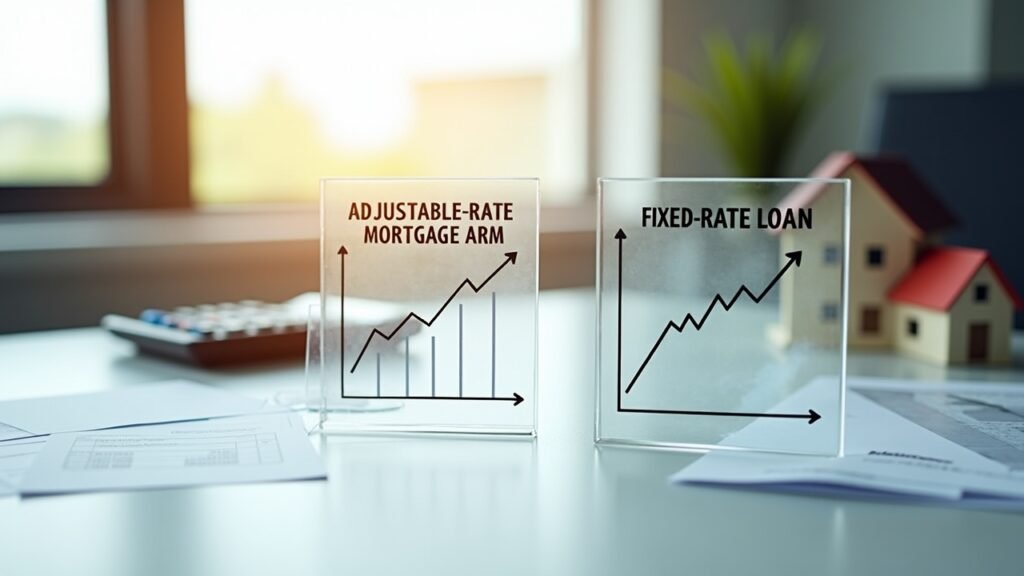
A fixed-rate mortgage is pretty much what it sounds like. Your interest rate stays the same for the entire loan term, whether that’s 15, 20, or 30 years. Your monthly principal and interest payment never changes.
I remember the relief I felt locking in my rate at 4.25%. Didn’t matter what the economy did after that — my payment was my payment. There’s something really comforting about that predictability, especially when you’re budgeting for a family.
The downside? Fixed rates tend to be slightly higher than the initial rate on an adjustable mortgage. You’re basically paying a premium for stability, which is totally worth it for some folks.
So What’s an Adjustable-Rate Mortgage (ARM)?
An adjustable-rate mortgage, or ARM, starts with a lower introductory interest rate that’s fixed for a set period — usually 5, 7, or 10 years. After that initial period, the rate adjusts periodically based on a market index, like the Secured Overnight Financing Rate (SOFR).
You’ll often see them written as 5/1 ARM or 7/1 ARM. That first number is how many years the rate stays fixed, and the second is how often it adjusts after that. Pretty straightforward once you get the hang of it.
A buddy of mine went with a 5/1 ARM back in 2019 because he was planning to sell within four years. Smart move — he saved about $200 a month compared to what a 30-year fixed would’ve cost him. But here’s the thing, plans change. He ended up staying in the house, and when that rate adjusted, his payment jumped by almost $400. Ouch.
Fixed vs Adjustable Rate Mortgage: Key Differences
- Interest rate stability: Fixed stays the same; ARM fluctuates after the intro period.
- Initial monthly payment: ARMs usually start lower, which can be tempting.
- Long-term cost: A fixed rate could cost more upfront but saves you from surprises later.
- Risk level: ARMs carry more risk if interest rates rise significantly.
- Best for: Fixed suits long-term homeowners; ARMs work well for short-term stays or when rates are expected to drop.
When Does a Fixed Rate Make More Sense?
If you’re planning to stay in your home for more than 7-10 years, a fixed-rate mortgage is almost always the safer bet. You won’t lose sleep over rate hikes. Period.
It also makes sense when interest rates are historically low. Locking in a good rate during those windows is like finding money on the ground. I really wish I had refinanced to a 2.8% fixed rate during 2021 — I dragged my feet and missed it. Don’t be like me.
When Might an ARM Actually Be the Smarter Choice?

Honestly, there are legit scenarios where an ARM wins. If you know you’re relocating in a few years, or if you’re buying a starter home you plan to outgrow, that lower initial rate can save you real money.
Also, if the Federal Reserve is signaling rate cuts, an ARM could work in your favor since your rate might actually decrease at adjustment time. It’s a gamble, but sometimes calculated risks pay off.
What It All Comes Down To
There’s no one-size-fits-all answer when comparing a fixed vs adjustable rate mortgage. It really depends on your timeline, your risk tolerance, and what the current rate environment looks like. Take the time to run the numbers for both options — and please, talk to a loan officer you trust before signing anything.
Advertisements
Your mortgage is probably the biggest debt you’ll ever carry. Treat that decision with the respect it deserves. And if you want to keep learning about home loans, rate strategies, and everything in between, head over to the Mortgage Margin blog — we’ve got plenty more posts to help you make smarter moves with your money.